Foreword / YouTube Video Review
I was loaned these to review by a viewer. I was not paid nor did I receive any other form of compensation for this review.
If, after reading this review, you decide you’d like to buy this speaker - though, frankly, I don’t recommend it - then please consider using my affiliate link below. I earn a small commission from it at no additional cost to you:
Crutchfield Purchase Link
All my reviews are done on my own time with great care to give you all the best set of data and information I can provide in order to help you make a well-informed purchase decision. I offer this for free to all who are interested. In return, if you want to support this site please see the bottom of this review for ways you can help. It is greatly appreciated.
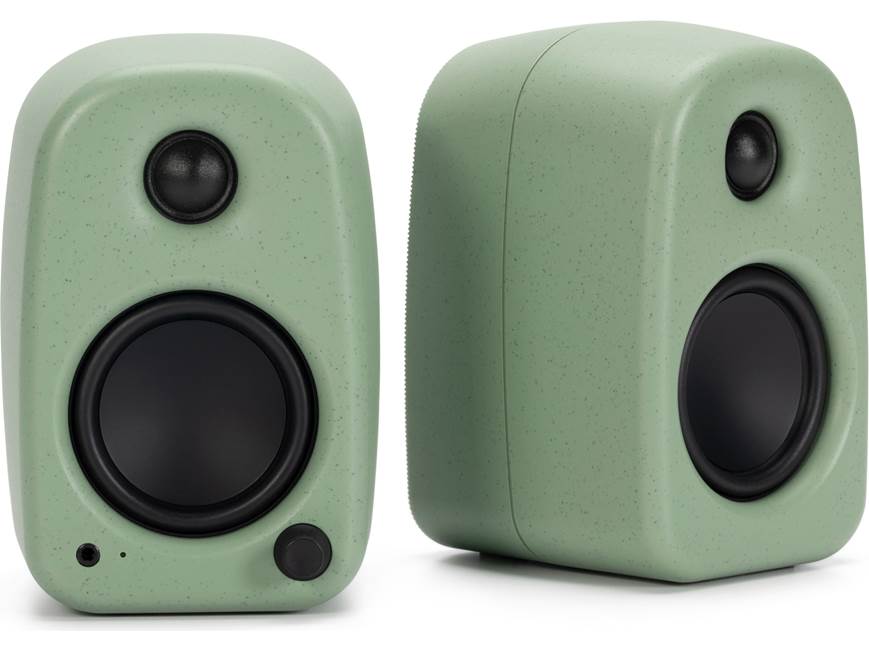
- 3/4" silk dome tweeters
- 3" paper cone woofers
- rear slot port for enhanced bass response
- Bluetooth 5.3
- 50-watt RMS amplifier built into primary speaker (32 watts for woofers, 18 watts for tweeters)
- frequency response: 80-22,000 Hz
- volume/source/power knob on primary speaker
- automatic 100 Hz high-pass filter when subwoofer is connected
- switchable left/right speaker configuration
- injection-molded cabinets made from recycled material
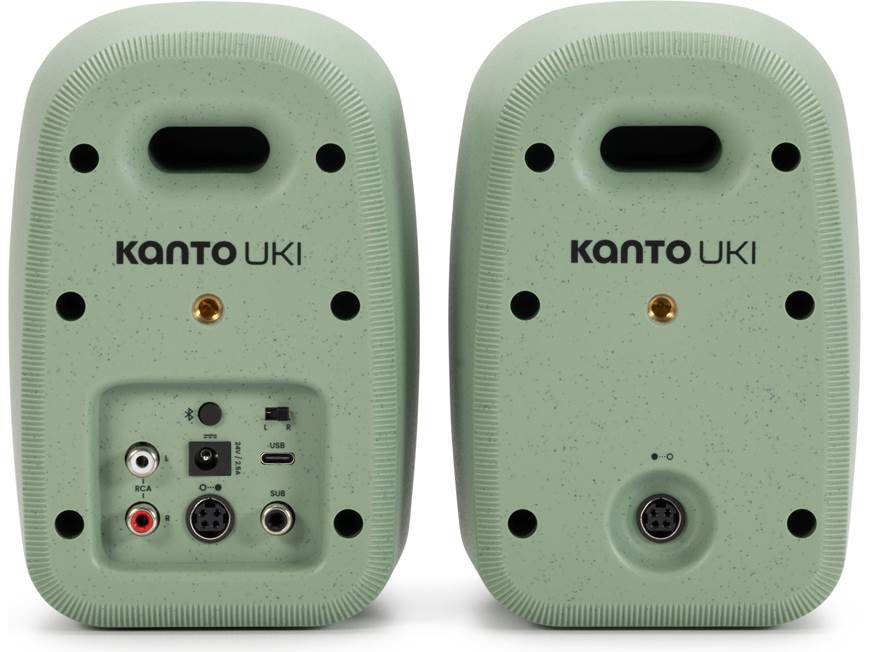
- requires AC power and speaker cable connection between speakers (cables included)
- Inputs and outputs:
- USB-C input for a computer (up to 16-bit/48 kHz playback)
- stereo RCA inputs
- front-baffle 3.5mm headphone jack
- mono RCA output for connecting a powered subwoofer
- Dimensions and warranty:
- 4.4"W x 6.5"H x 5.9"D (each)
- weight: 2.2 lbs. (primary speaker), 1.9 lbs. (passive speaker)
As of this writing MSRP is $269.99/pair.
Back:
CTA-2034 (SPINORAMA) and Accompanying Data
All data collected using Klippel’s Near-Field Scanner. The Near-Field-Scanner 3D (NFS) offers a fully automated acoustic measurement of direct sound radiated from the source under test. The radiated sound is determined in any desired distance and angle in the 3D space outside the scanning surface. Directivity, sound power, SPL response and many more key figures are obtained for any kind of loudspeaker and audio system in near field applications (e.g. studio monitors, mobile devices) as well as far field applications (e.g. professional audio systems). Utilizing a minimum of measurement points, a comprehensive data set is generated containing the loudspeaker’s high resolution, free field sound radiation in the near and far field. For a detailed explanation of how the NFS works and the science behind it, please watch the below discussion with designer Christian Bellmann:
IMPORTANT SETUP INFO: This speaker was measured with the reference point at the tweeter. Speaker was broken in. This is absoltely a desktop speaker and not intended for any listening in a farfield environment. Therefore, be cautious to not evaluate this speaker’s performance based on farfield conditions. Evaluate the speaker on the on-axis or slightly off-axis anechoic response rather than the estimated in-room response. Side note: another measurement-based website published their review of this speaker which aligns with mine. You can find their review here.
Measurements are provided in a format in accordance with the Standard Method of Measurement for In-Home Loudspeakers (ANSI/CTA-2034-A R-2020). For more information, please see this link.
CTA-2034 / SPINORAMA:
The On-axis Frequency Response (0°) is the universal starting point and in many situations it is a fair representation of the first sound to arrive at a listener’s ears.
The Listening Window is a spatial average of the nine amplitude responses in the ±10º vertical and ±30º horizontal angular range. This encompasses those listeners who sit within a typical home theater audience, as well as those who disregard the normal rules when listening alone.
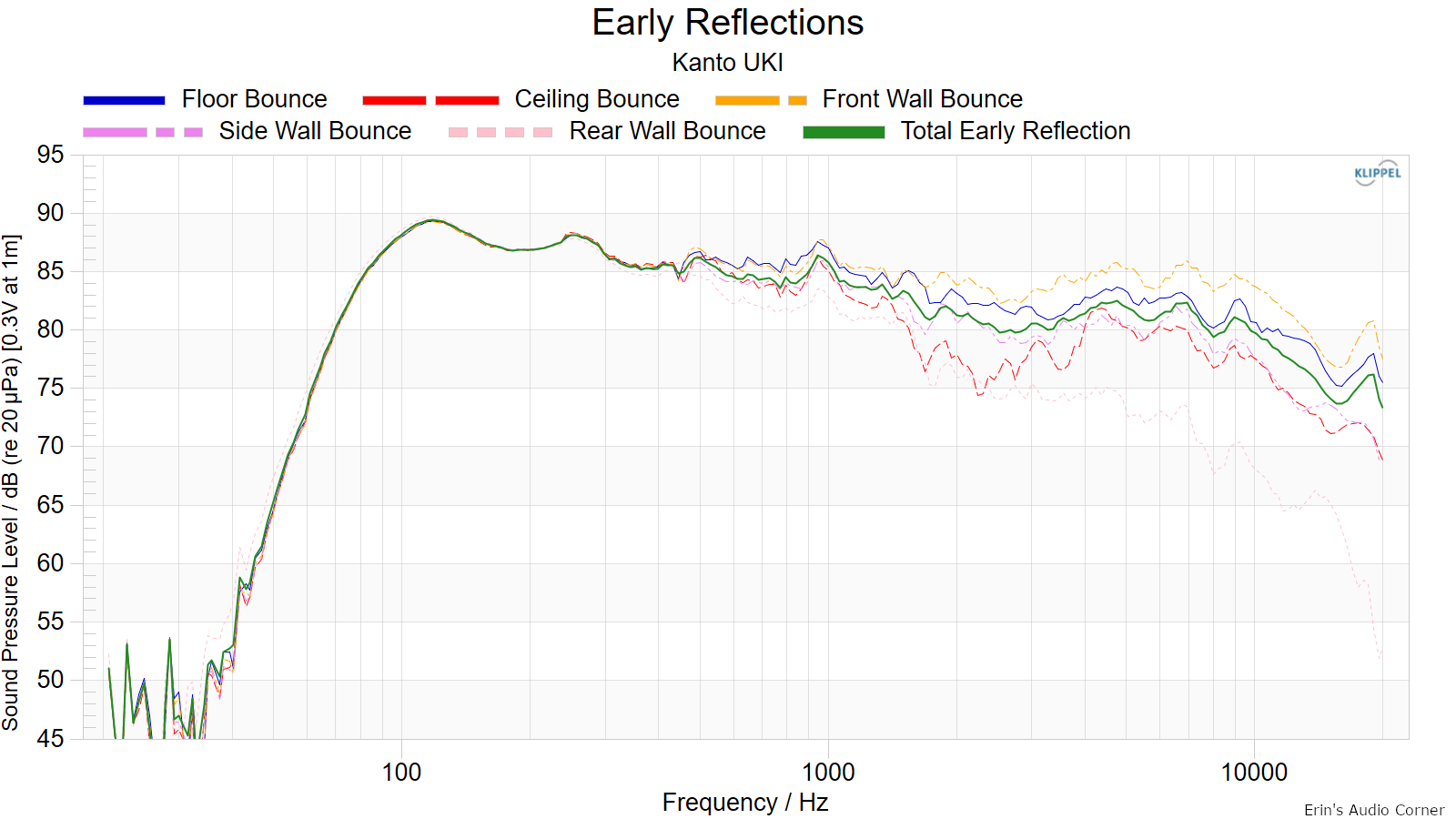
The Early Reflections curve is an estimate of all single-bounce, first-reflections, in a typical listening room.
Sound Power represents all of the sounds arriving at the listening position after any number of reflections from any direction. It is the weighted rms average of all 70 measurements, with individual measurements weighted according to the portion of the spherical surface that they represent.
Sound Power Directivity Index (SPDI): In this standard the SPDI is defined as the difference between the listening window curve and the sound power curve.
Early Reflections Directivity Index (EPDI): is defined as the difference between the listening window curve and the early reflections curve. In small rooms, early reflections figure prominently in what is measured and heard in the room so this curve may provide insights into potential sound quality.

Early Reflections Breakout:
Floor bounce: average of 20º, 30º, 40º down
Ceiling bounce: average of 40º, 50º, 60º up
Front wall bounce: average of 0º, ± 10º, ± 20º, ± 30º horizontal
Side wall bounces: average of ± 40º, ± 50º, ± 60º, ± 70º, ± 80º horizontal
Rear wall bounces: average of 180º, ± 90º horizontal
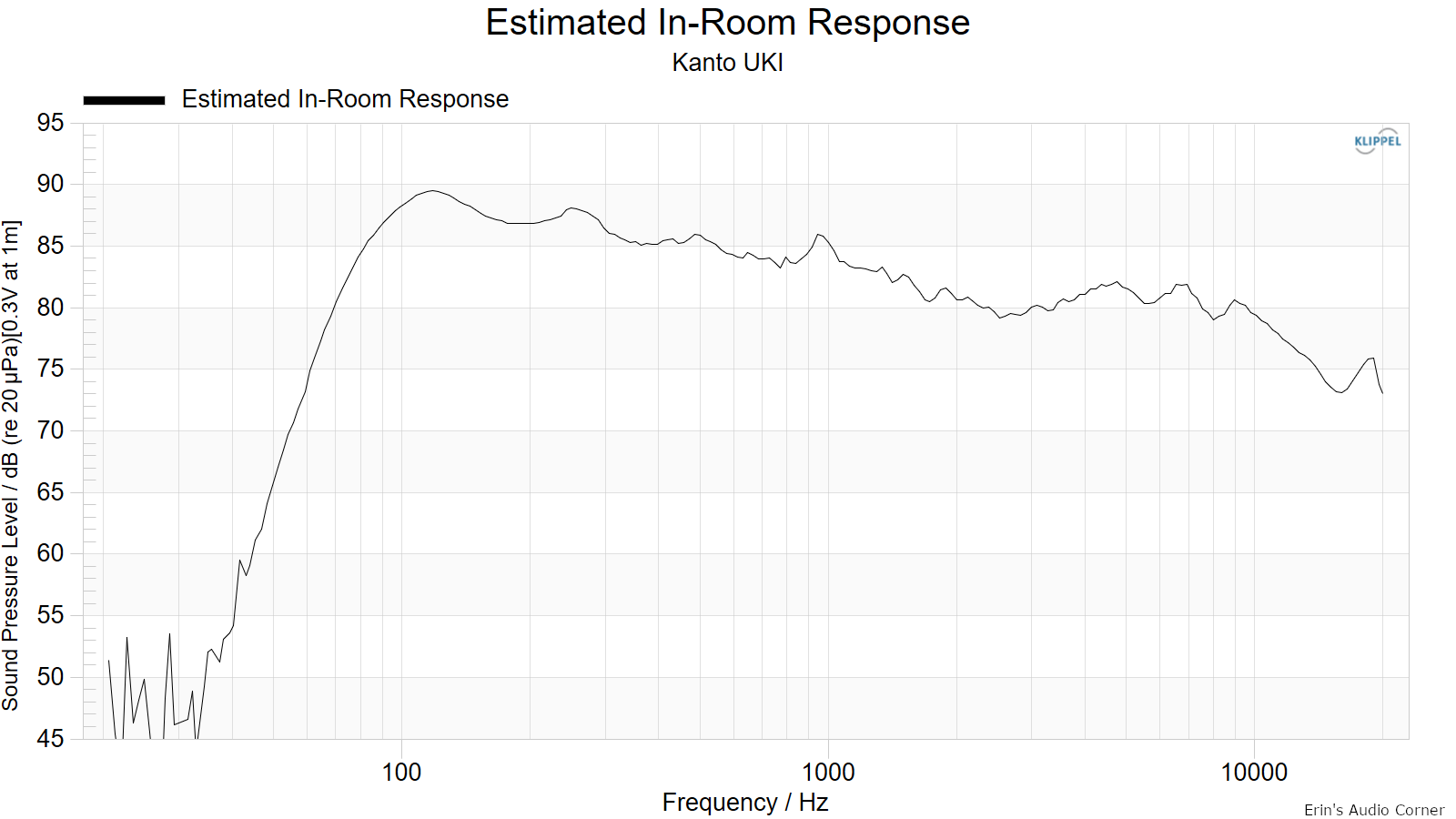
Estimated In-Room Response:
In theory, with complete 360-degree anechoic data on a loudspeaker and sufficient acoustical and geometrical data on the listening room and its layout it would be possible to estimate with good precision what would be measured by an omnidirectional microphone located in the listening area of that room. By making some simplifying assumptions about the listening space, the data set described above permits a usefully accurate preview of how a given loudspeaker might perform in a typical domestic listening room. Obviously, there are no guarantees, because individual rooms can be acoustically aberrant. Sometimes rooms are excessively reflective (“live”) as happens in certain hot, humid climates, with certain styles of interior décor and in under-furnished rooms. Sometimes rooms are excessively “dead” as in other styles of décor and in some custom home theaters where acoustical treatment has been used excessively. This form of post processing is offered only as an estimate of what might happen in a domestic living space with carpet on the floor and a “normal” amount of seating, drapes and cabinetry.
For these limited circumstances it has been found that a usefully accurate Predicted In-Room (PIR) amplitude response, also known as a “room curve” is obtained by a weighted average consisting of 12 % listening window, 44 % early reflections and 44 % sound power. At very high frequencies errors can creep in because of excessive absorption, microphone directivity, and room geometry. These discrepancies are not considered to be of great importance.
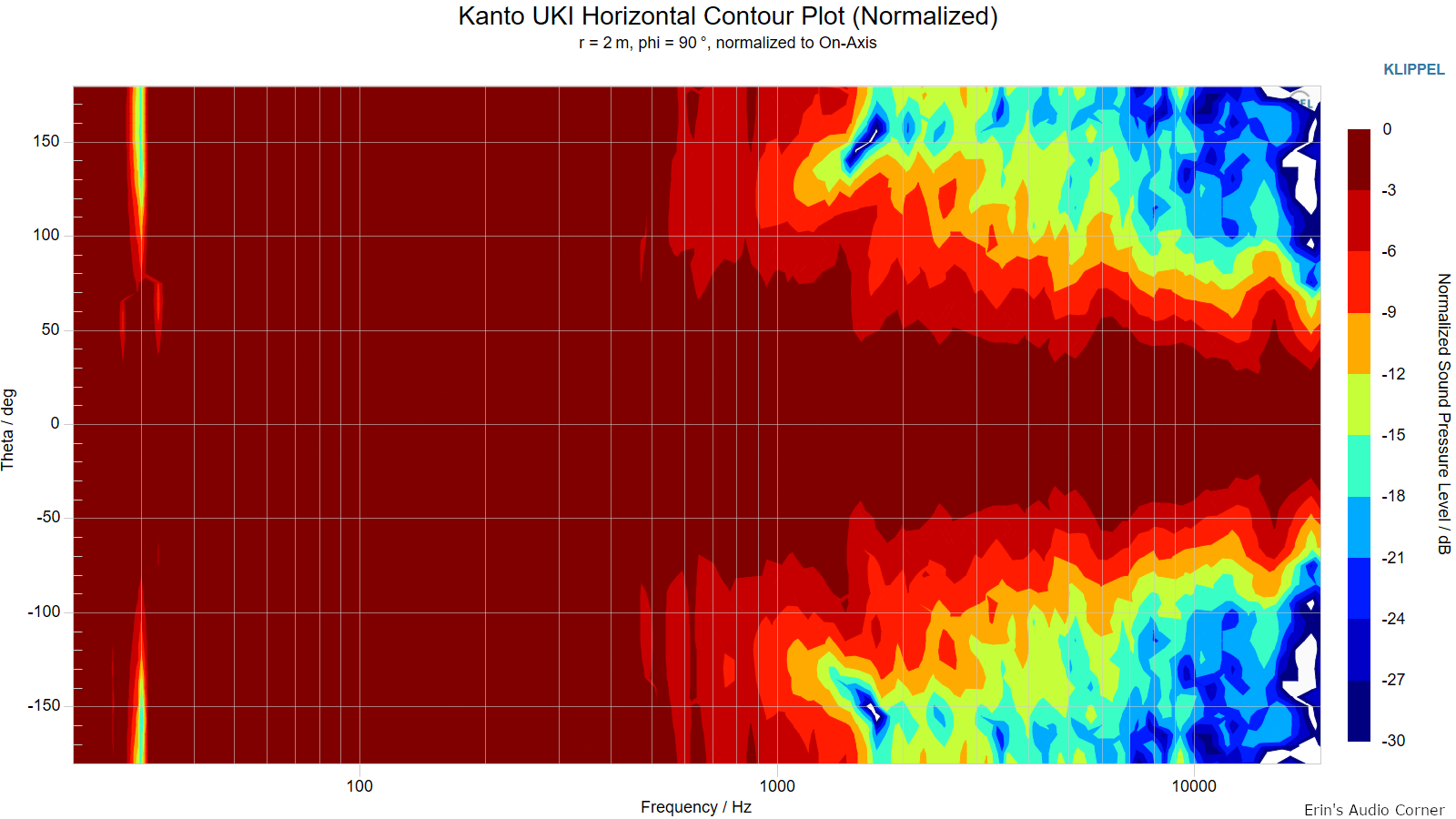
Horizontal Contour Plot (normalized):
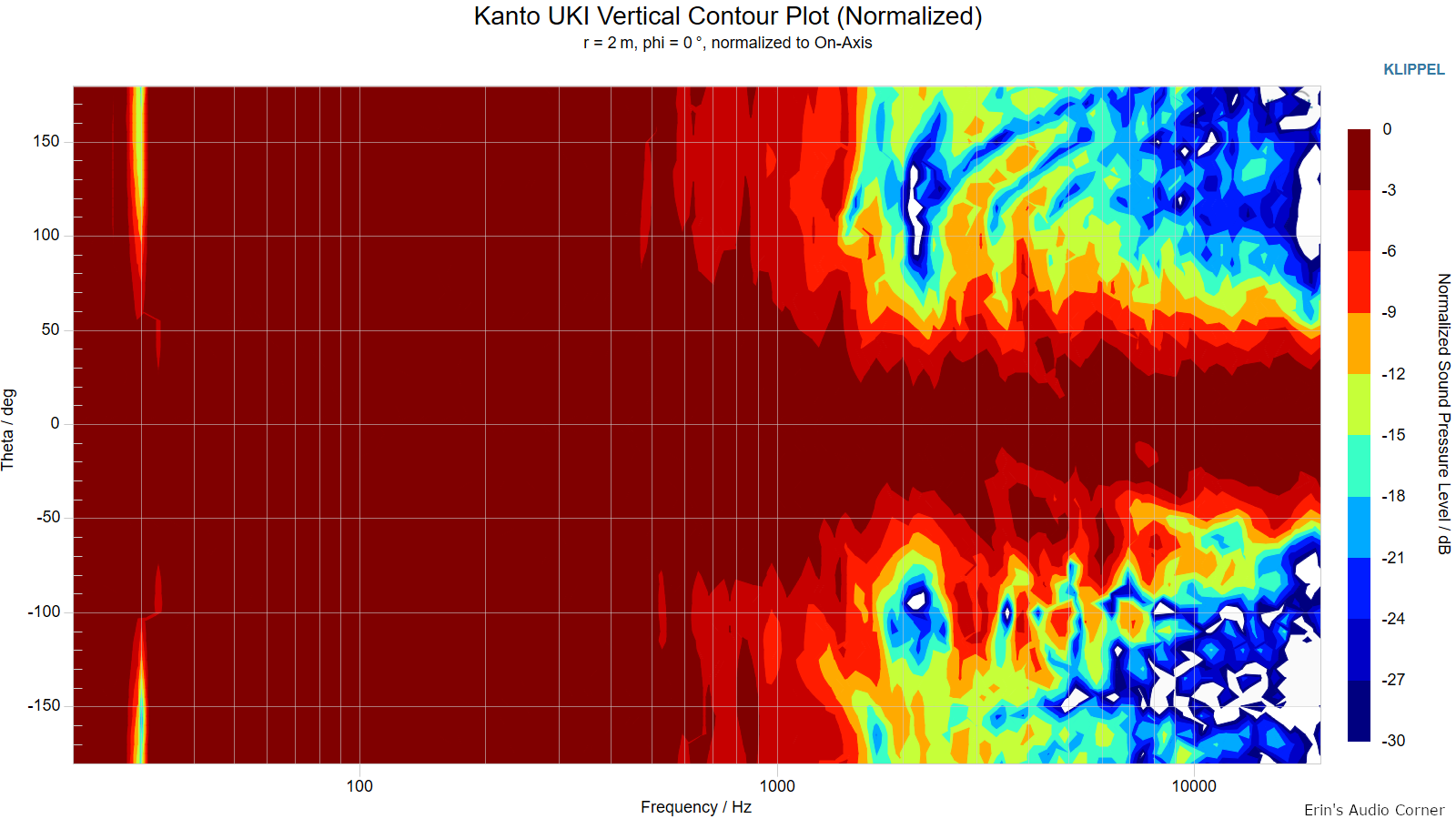
Vertical Contour Plot (normalized):
Additional Measurements
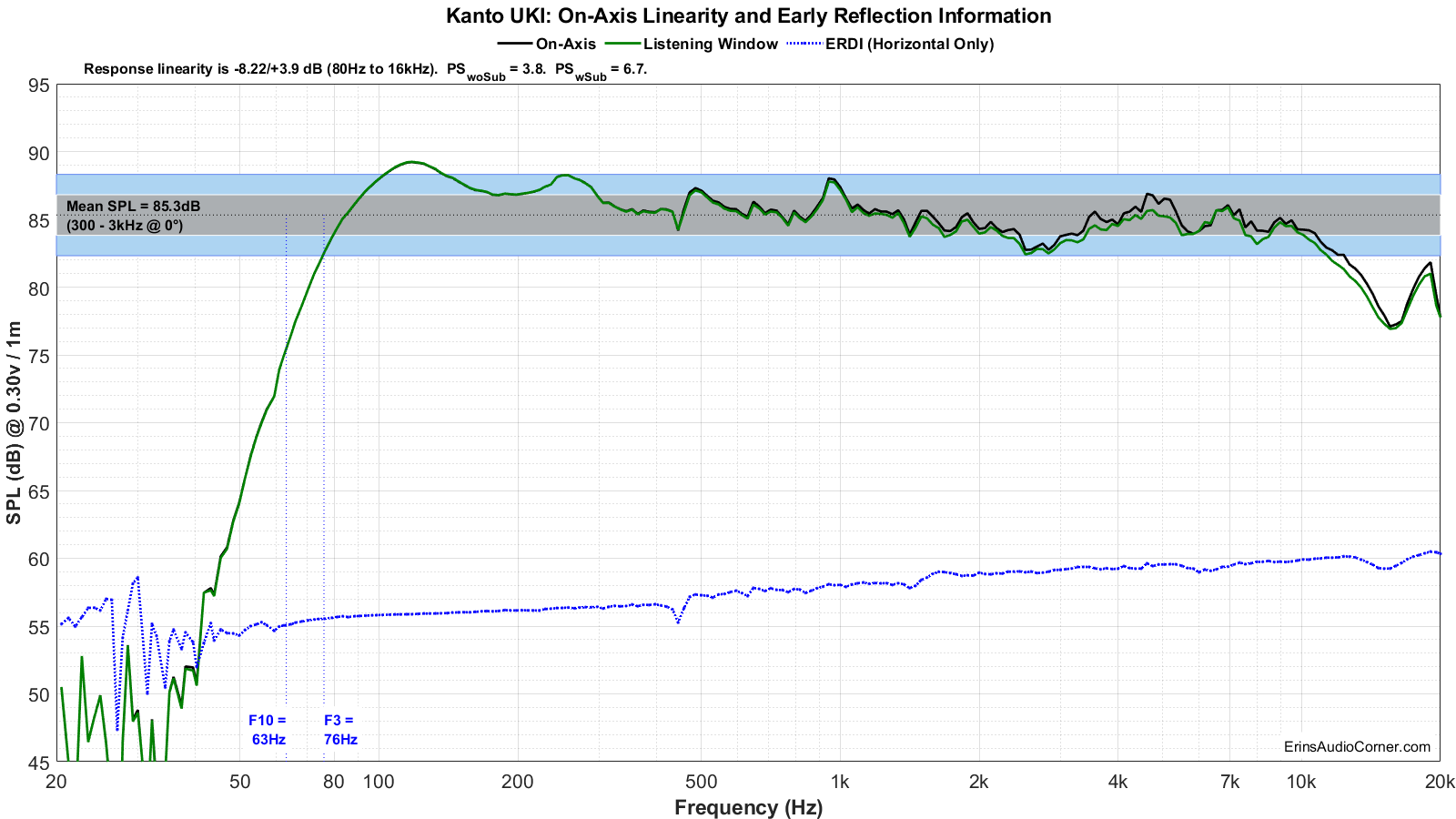
Response Linearity
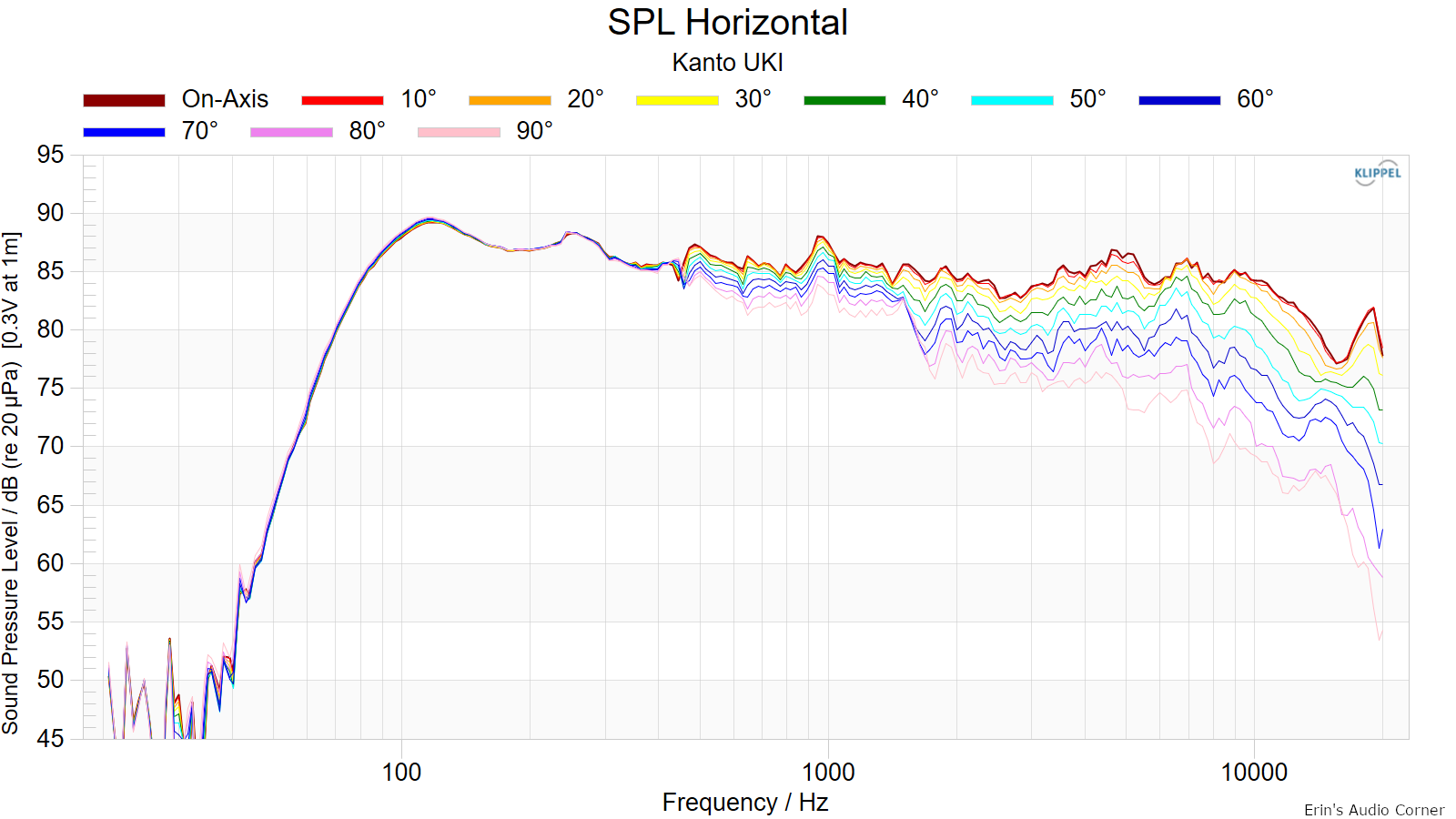
Horizontal Frequency Response:
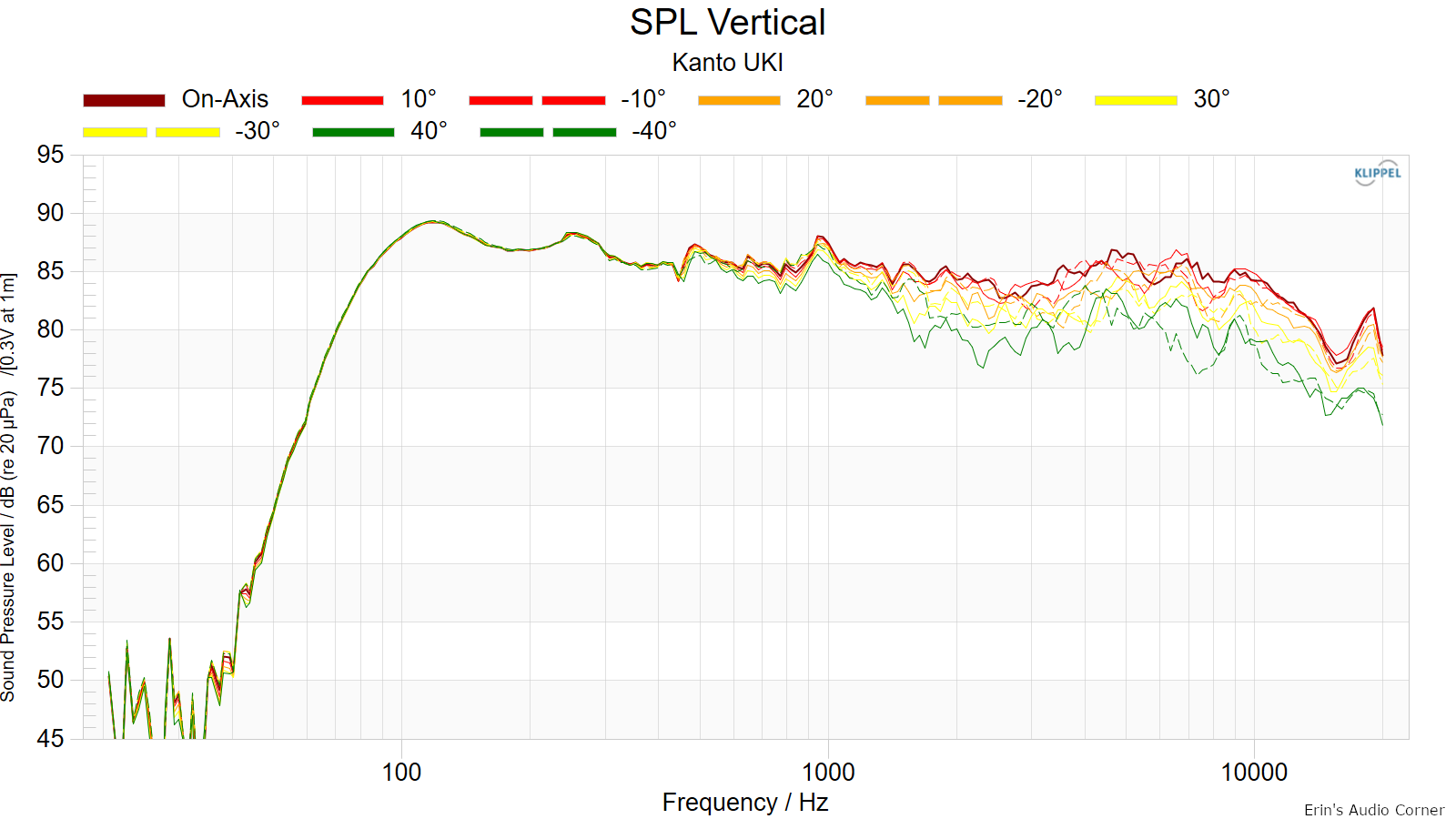
Vertical Frequency Response:
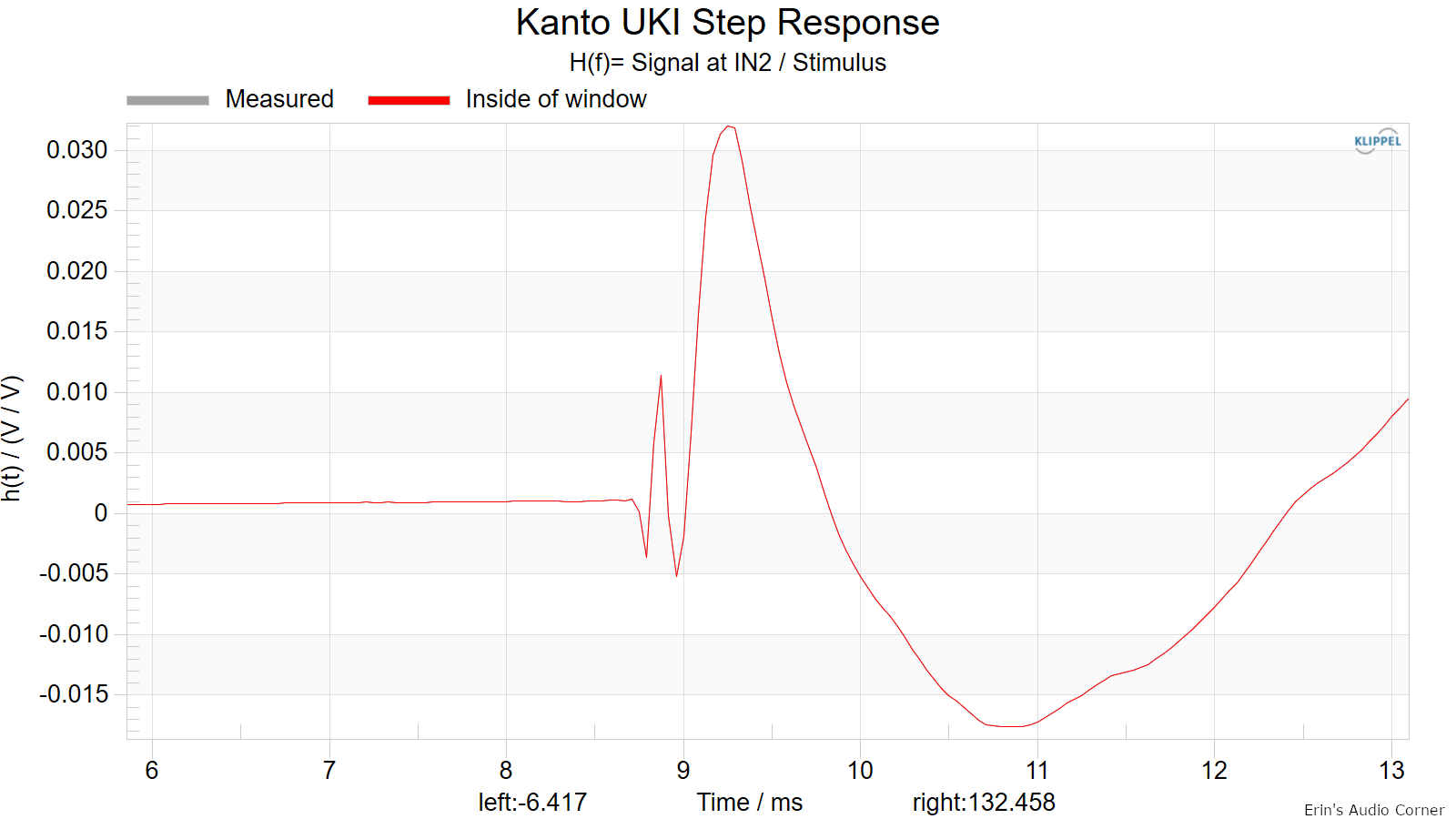
Step Response
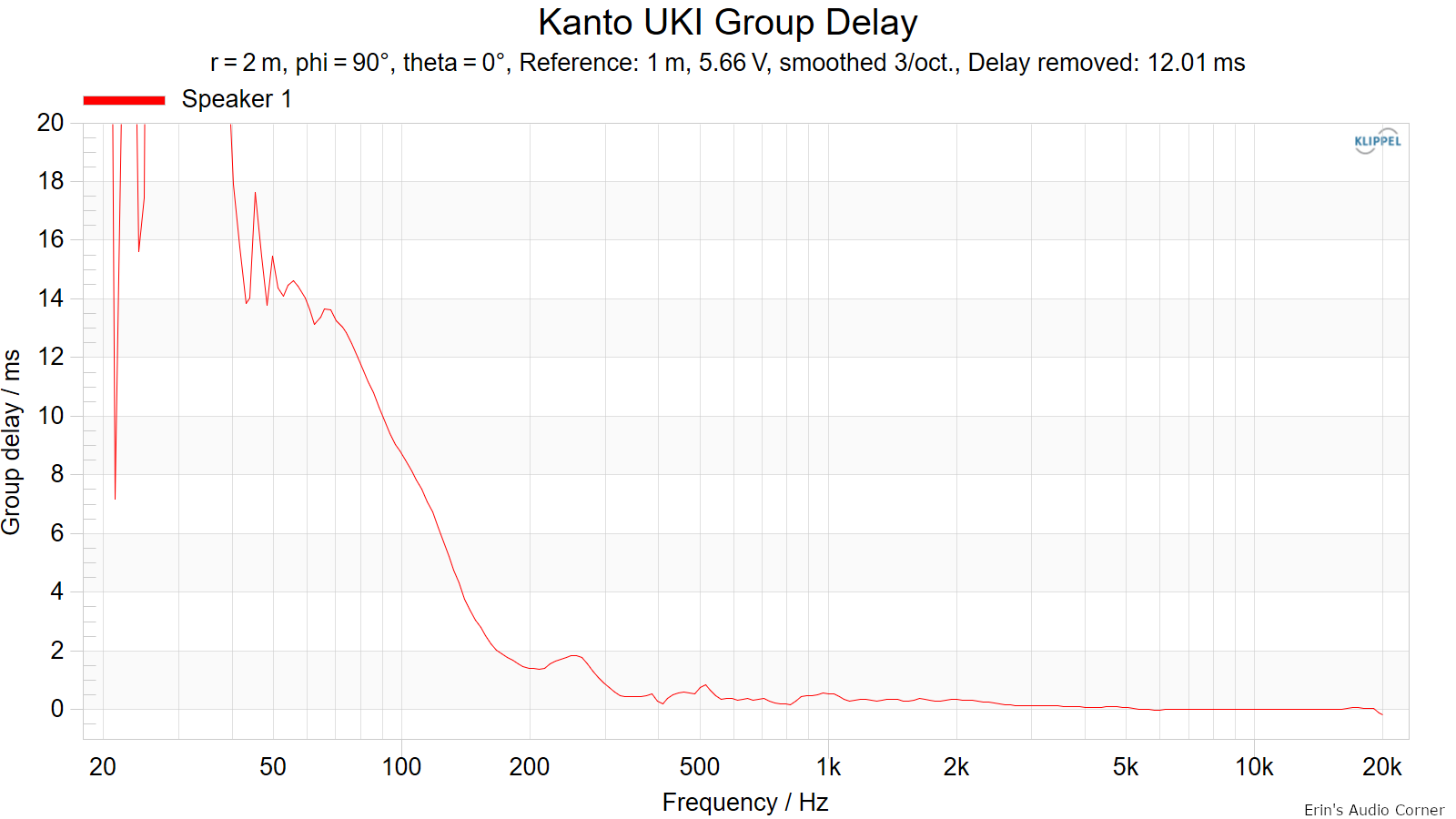
Group Delay
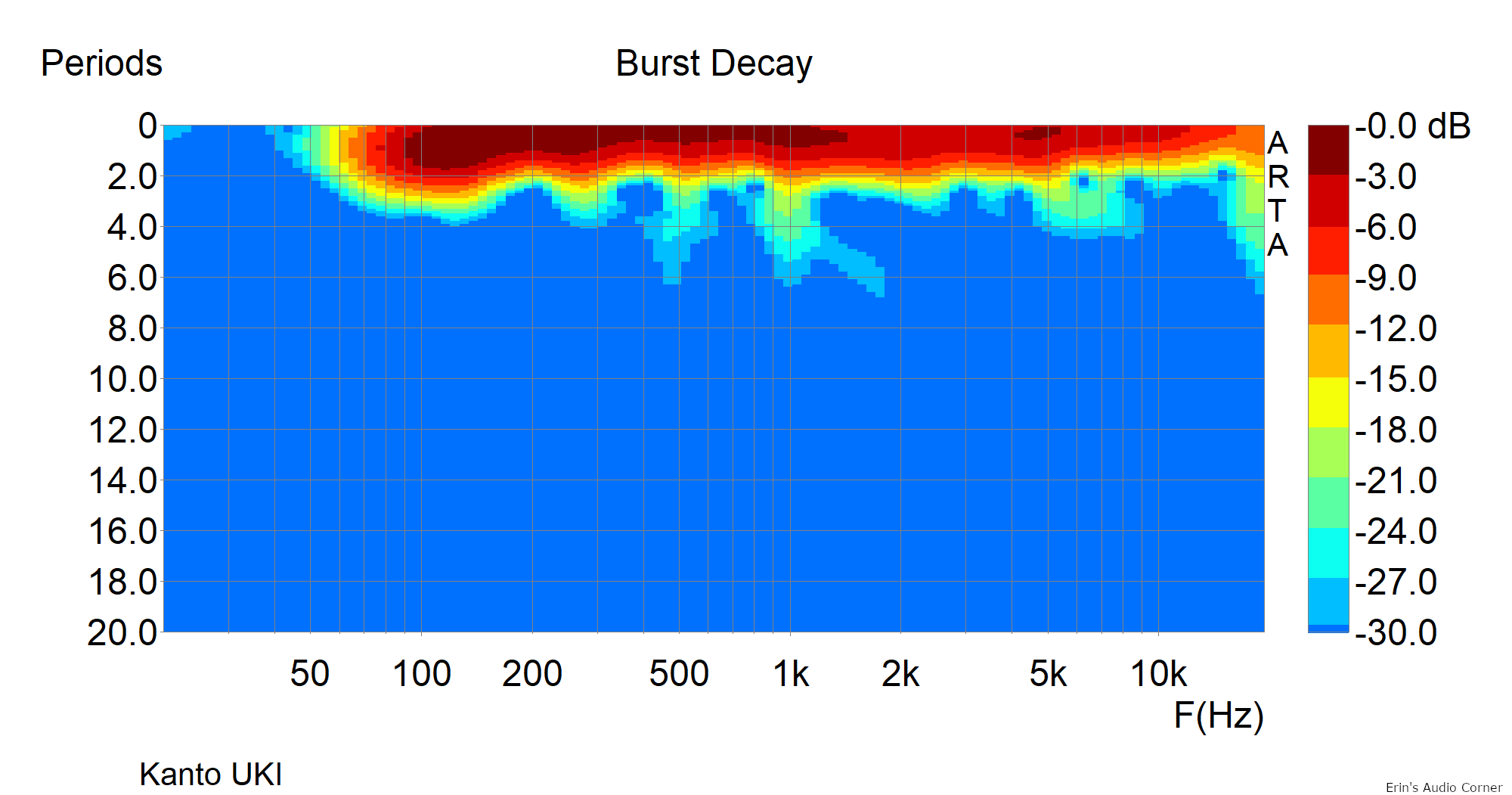
Burst Decay
This data is full anechoic where most spectral decay type graphics are created using quasi-anechoic data. For more information on the differences between Burst Decay and Cumulative Spectral Decay (CSD) graphics please see Section 6.5 of the ARTA User Manual linked below. I would like to extend a professional "thank you" to Ivo Mateljan for this software.
Harmonic Distortion
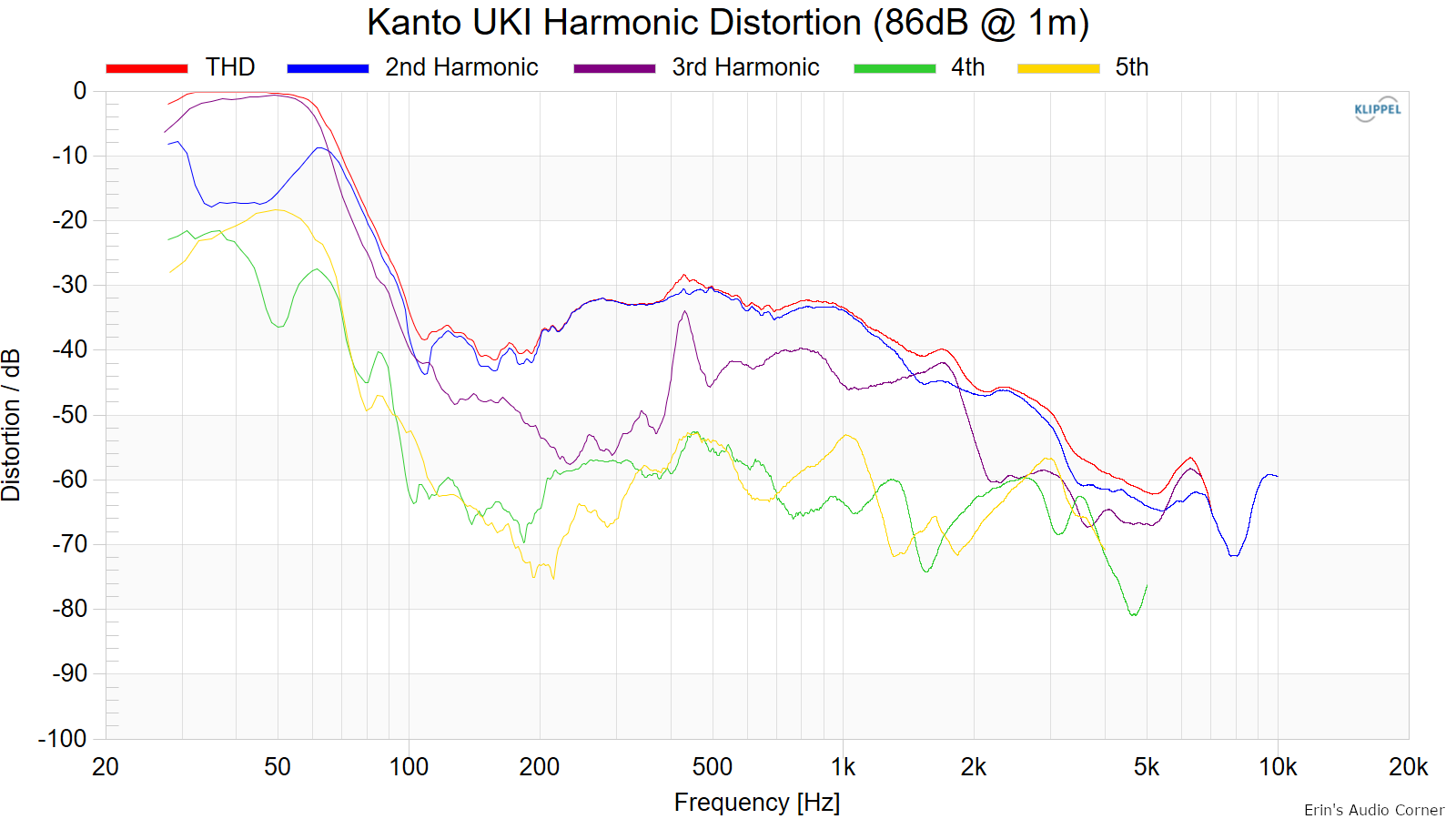
Harmonic Distortion at 86dB @ 1m:
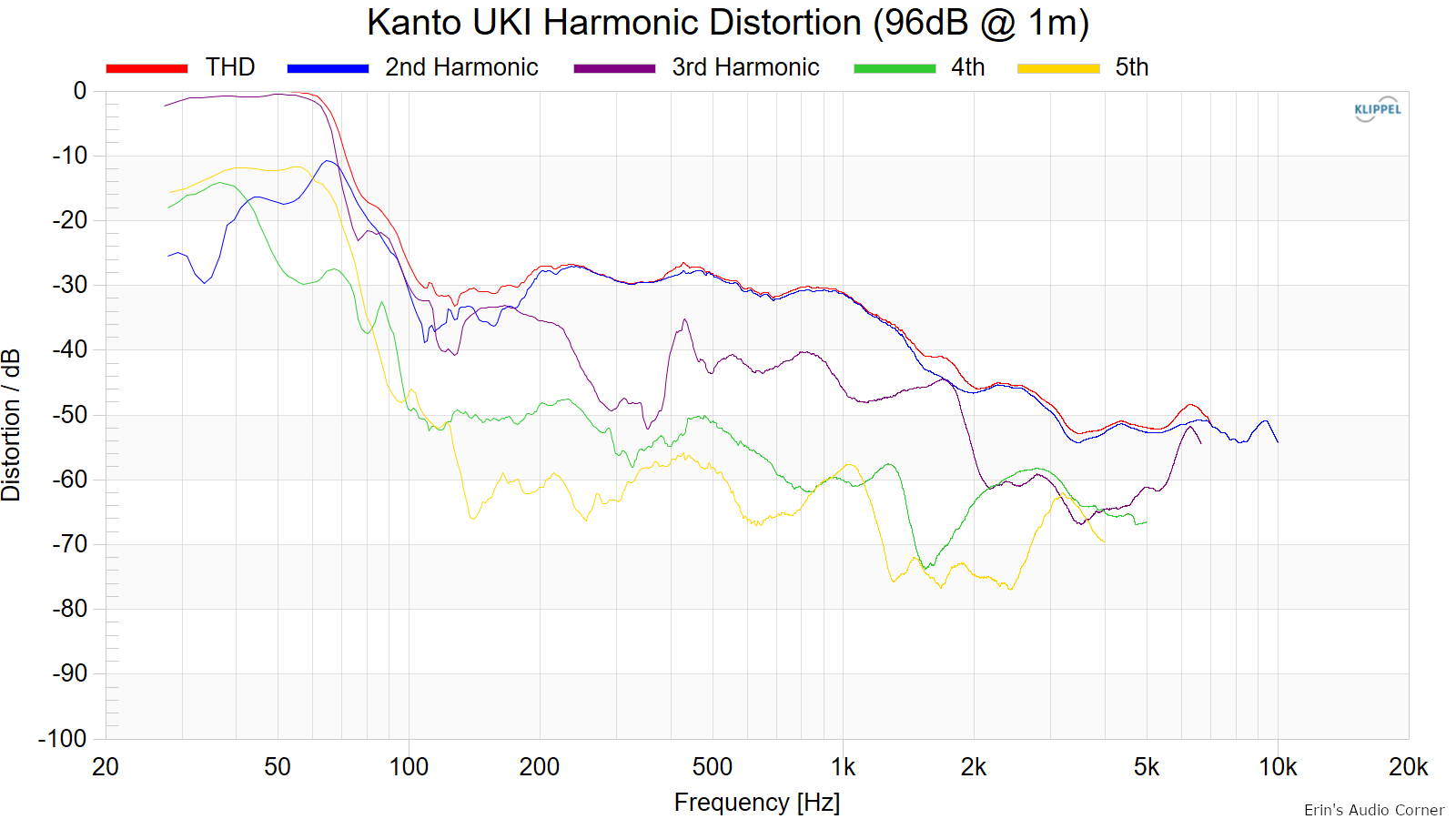
Harmonic Distortion at 96dB @ 1m:
Dynamic Range (Instantaneous Compression Test)
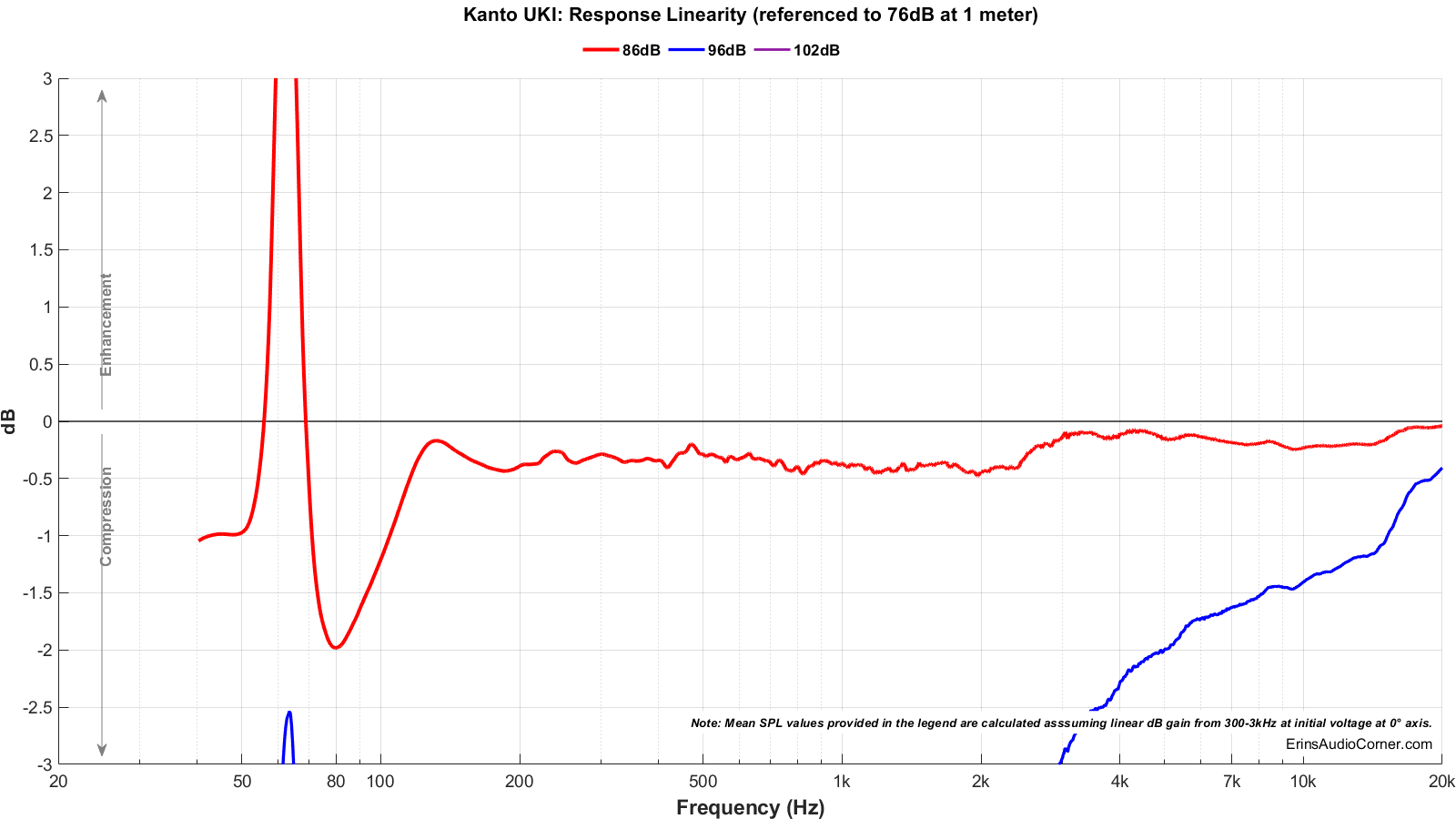
The below graphic indicates just how much SPL is lost (compression) or gained (enhancement; usually due to distortion) when the speaker is played at higher output volumes instantly via a 2.7 second logarithmic sine sweep referenced to 76dB at 1 meter. The signals are played consecutively without any additional stimulus applied. Then normalized against the 76dB result.
The tests are conducted in this fashion:
- 76dB at 1 meter (baseline; black)
- 86dB at 1 meter (red)
- 96dB at 1 meter (blue)
- 102dB at 1 meter (purple)
The purpose of this test is to illustrate how much (if at all) the output changes as a speaker’s components temperature increases (i.e., voice coils, crossover components) instantaneously.
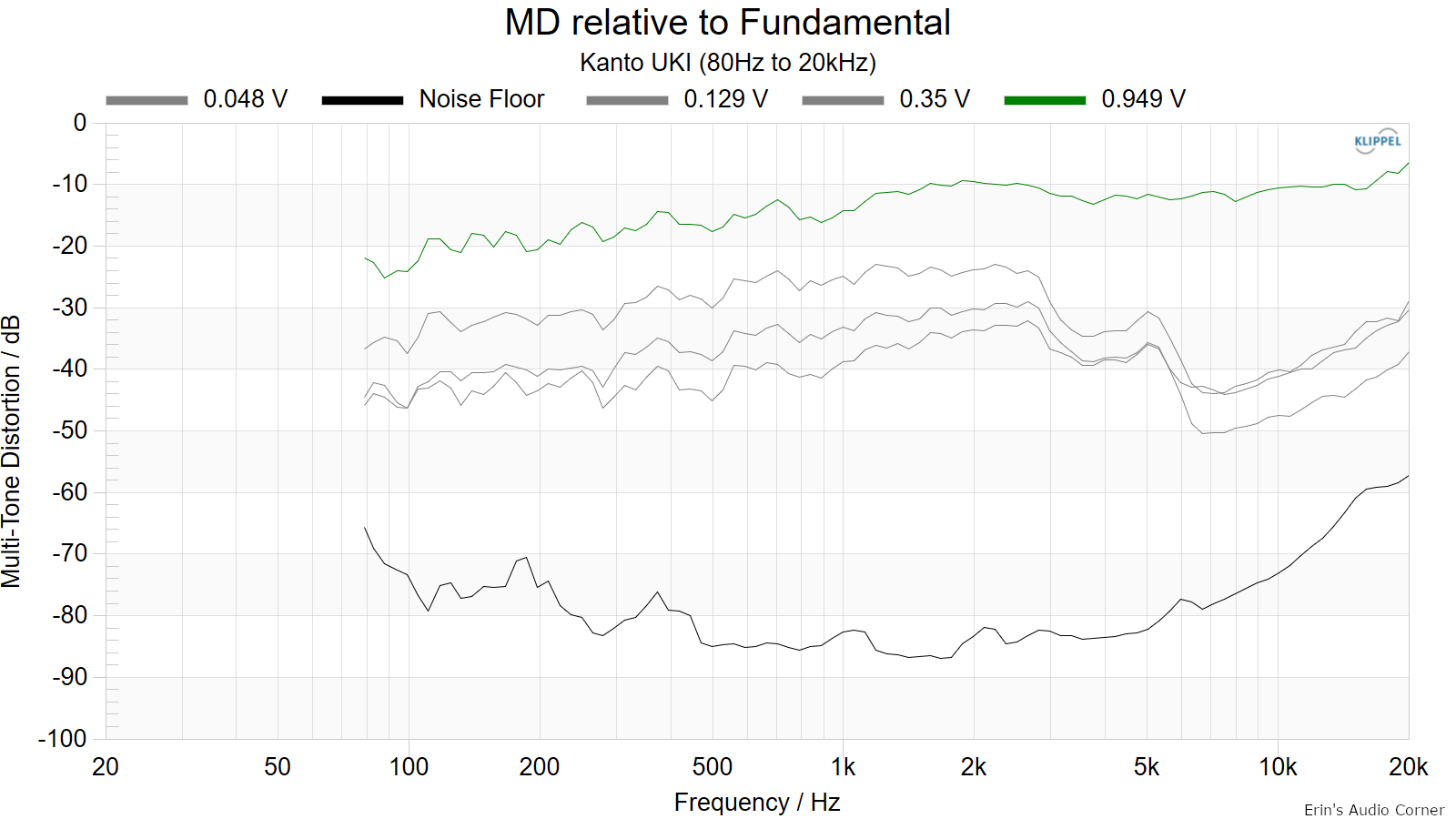
Multitone Distortion
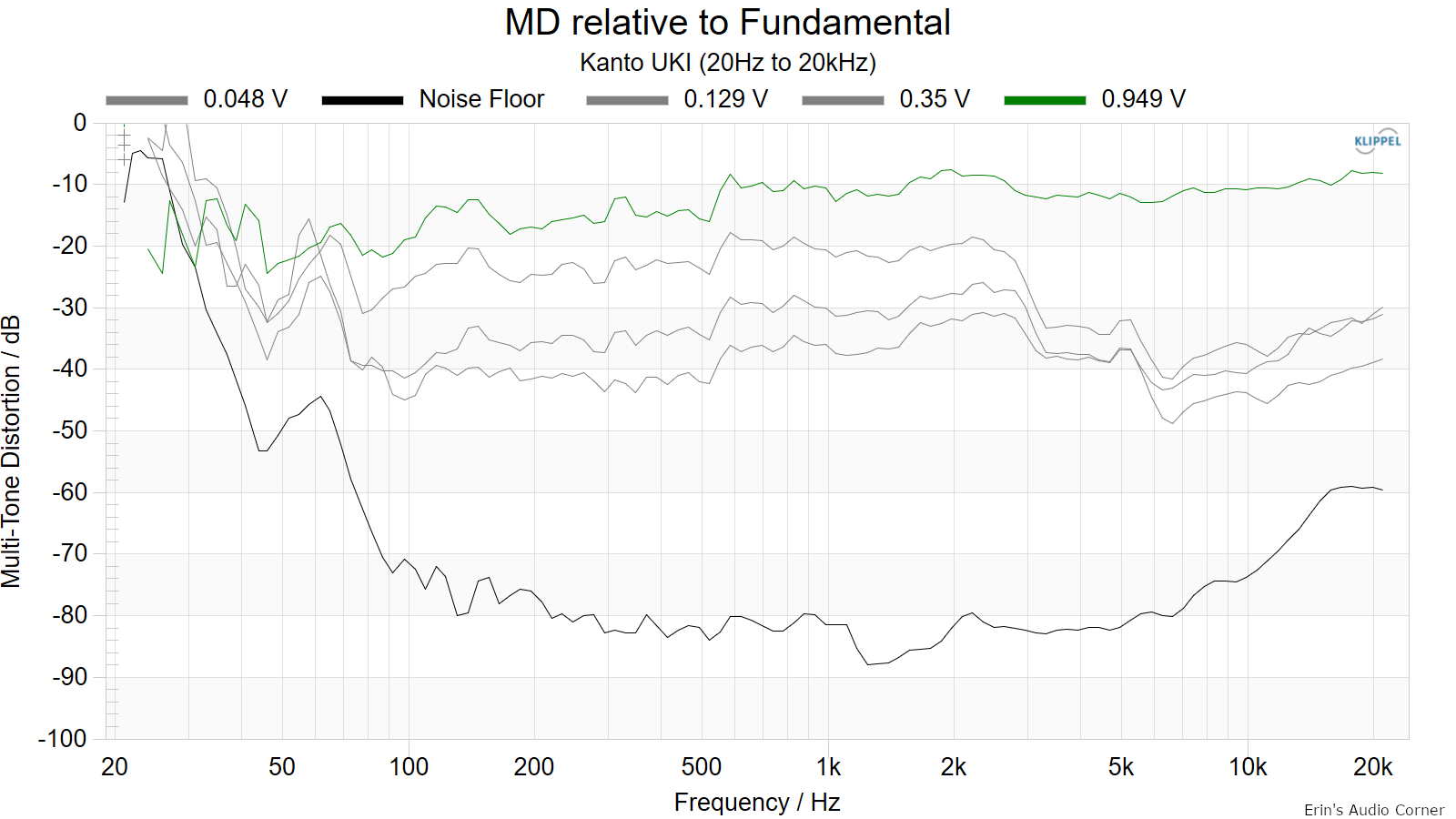
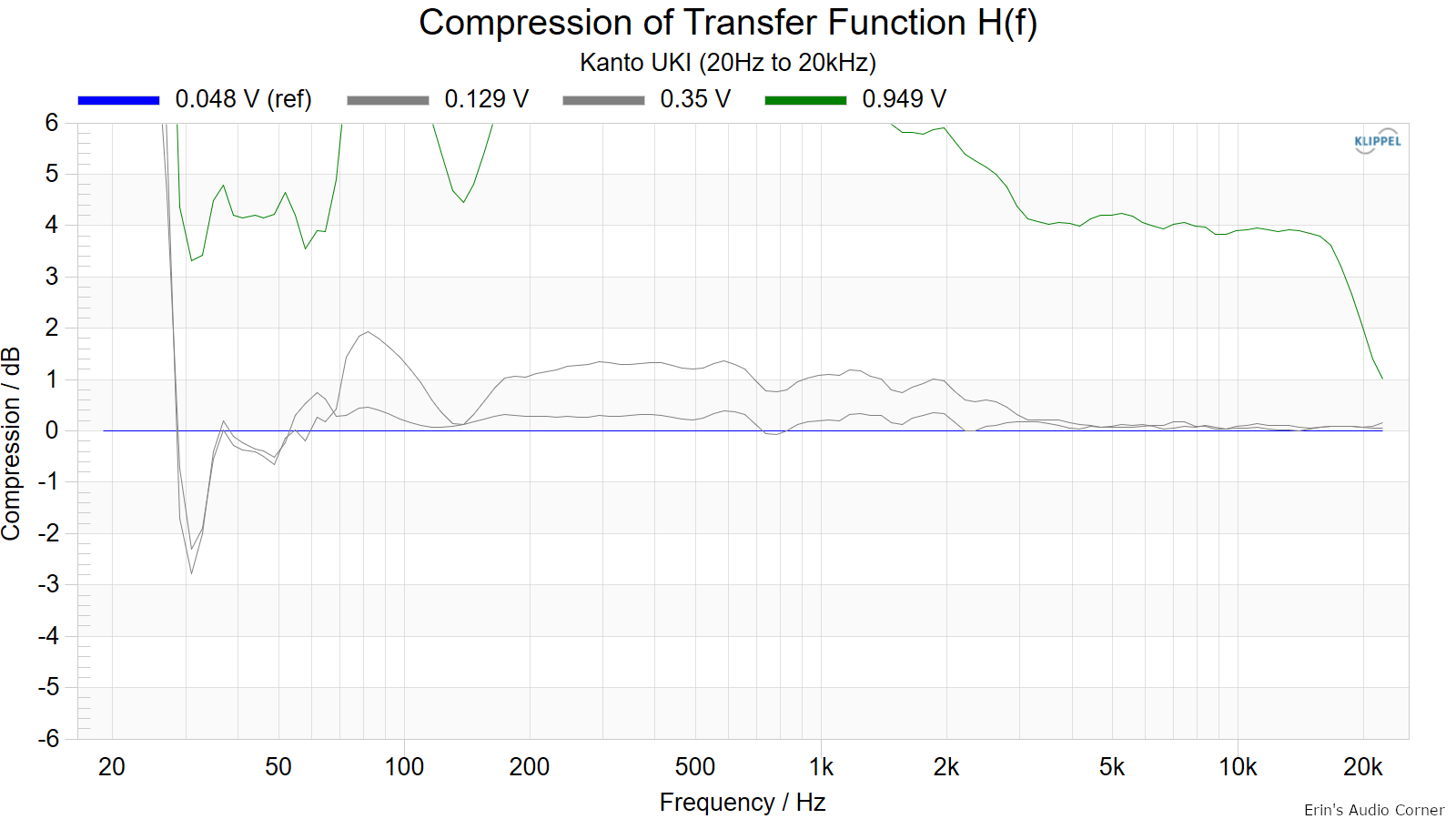
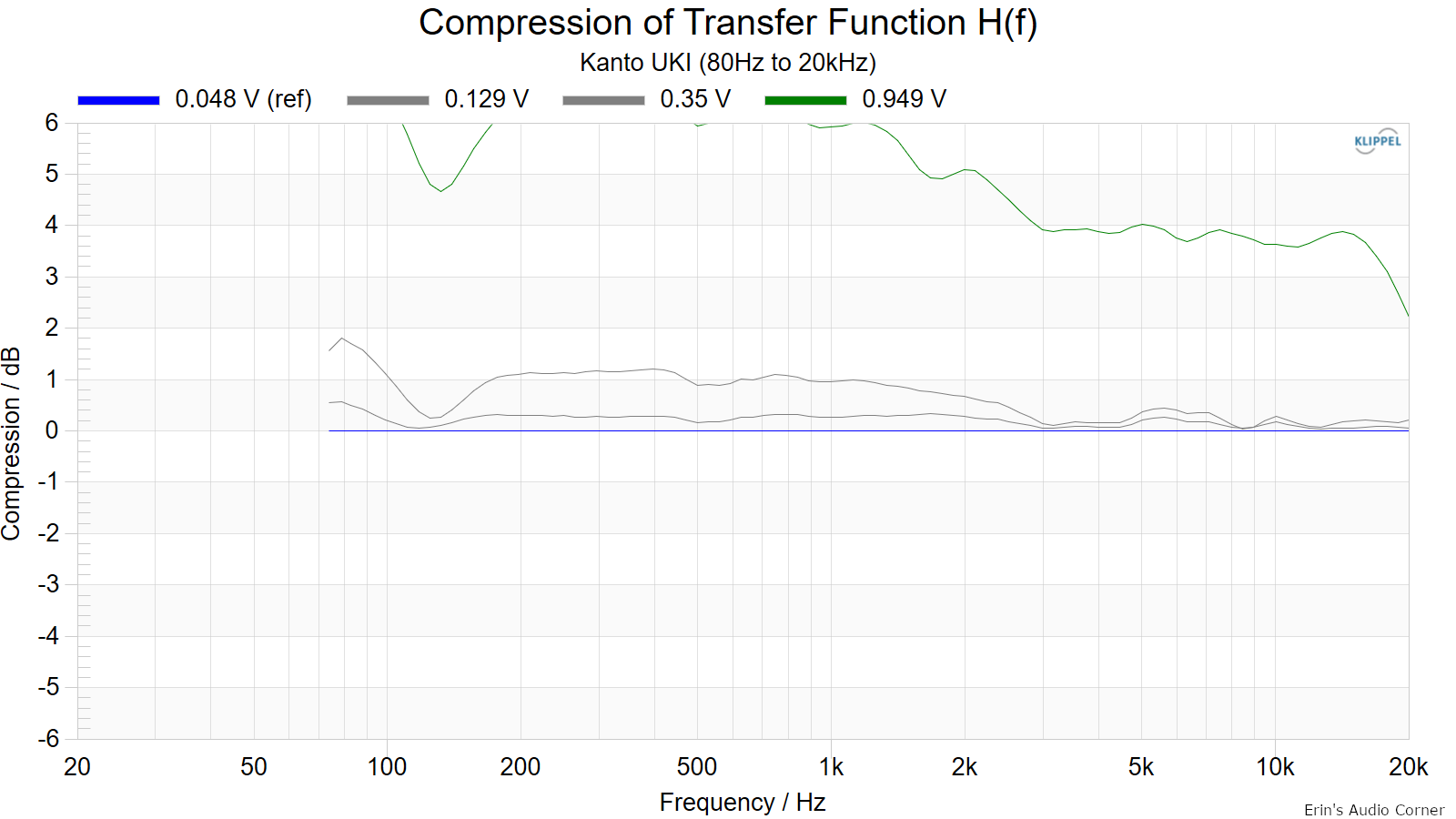
The following tests are conducted at (4) approximate equivalent output volumes: 70/79/87/96dB @ 1 meter. The (4) voltages listed in the legend result in these SPL values. This test signal is dense, similar to pink noise and excites the entire spectrums listed below at the same time. The test signal lasts 30 seconds. This is different than the sine wave test signal used to measure frequency response. The purpose of this distortion and compression test is to illustrate how much (if at all) the output changes as a speaker’s components temperature increases (i.e., voice coils, crossover components) over time.
Given the test signal is similar to pink noise and exciting the entire spectrum at the same time I also include compression results, which is captured at the same time distortion is captured. Sometimes these results differ from the compression results you see above (namely with powered designs incorporating DSP-based limiting).
Note: The KLIPPEL software shows compression in the positive scale.
The test was conducted in (3) manners:
- Full bandwidth (20Hz to 20kHz)
- 80Hz to 20kHz
The reason for the two measurements is to simulate running the speaker full range vs using a high-pass filter at 80Hz. However, note: the 2nd test low frequency limit at 80Hz is a “brick wall” and doesn’t quite emulate a standard filter of 12 or 24dB/octave. But… it’s close enough to illustrate the point.
- Full bandwidth (20Hz to 20kHz)
- 80Hz to 20kHz
Parting / Random Thoughts
I saw this speaker at AXPONA 2025 and thought to myself “what a cool little speaker”. I liked the color options and even thought that this could be a serious contender to the smaller offerings from Genelec at a fraction of the cost.
I was impressed by the Kanto ORA4 which I reviewed earlier this year (link) and had hoped that the little UKI would imitate the performance of the ORA4. Unfortunately, that’s not the case.
The UKI has an oddly tilted downward on-axis response. I suppose for some this could be described as “laid back” or “mellow” or “soft” (which was how their owner described them). But I just prefer to call it “not linear”. I spoke with Kanto about this at AXPONA 2026 and relayed my surprise of the clear tonal shift (pun intended) in this design vs their other designs. Notably the ORA4. It was confirmed that the response of the UKI is indeed as I heard it. In other words, no issues with the pair I was sent by their owner.
Based on the multitone distortion compression results, I’d ballpark the maxiumum SPL at about 87dB @ 1m for the single unit which is around 90-93dB for the pair (frequency dependent).
Whilte it’s not “awful”, the frequency response’s downward tilt make this a “no go” from me. While I have seen worse, the fact that other Kanto speakers display much better linearity - and the fact that this will likely be sat on a desk below the listener’s ears and therefore sound more “dull” or “laid back” - make me think this could be a better product. It doesn’t make me happy to be the bearer of bad news because I always hope the best for a product. If for no other reason than it gives the consumer more product options. My hope is Kanto may be able to offer some sort of firmware update to give users a more linear, accurate response profile. If you want to stay in the Kanto product line then I advise looking at the ORA4.
Stepping outside of the Kanto family, I’ve had good luck with the following Edifier M60 desktop speakers which are now about $199/pair.
Another alternative would be something like the ADAM Audio D3V or the KALI LP-UNF. However, both of these options are $349/pair and a decent bit larger than this Kanto UKI.
*I just noticed that the Kanto ORA4 has increased in price from $349/pair when I reviewed them in January 2026 to $449/pair.
Support / Contribute
I do not take adspace nor do manufacturers pay me for reviews. All revenue is through YouTube ad-revenue or directly from contributions from viewers such as yourself. While this is not my full-time job it’s cool when I’m able to make a few bucks for my efforts.
If you’d like to support the channel I have listed a few ways below. Thank you!
Patreon:
Want to be more involved? On Patreon you can vote in polls, see behind-the-scenes stuff, read about the occasional manufacturer drama (fun, right?), and help shape what I do next.
👉 https://www.patreon.com/erinsaudiocorner
Donate Via PayPal:
If you would like to contribute directly via PayPal that would be appreciated!
👉 https://www.paypal.com/donate?hosted_button_id=CLHSW4L9SBSLY
Generic Affiliate Links:
Anytime you’re buying something online — whether it’s speakers, TVs, or just everyday stuff — you can use the clickable links below. I get a small commission (at no extra cost to you), and it adds up more than you’d think.
Amazon
Crutchfield
Audio Advice
AsciLab Speakers
Arendal Sound
Best Buy
AliExpress
Wal-Mart
Parts-Express
Newegg
Samsung
Target
Thomann
Emotiva
Monoprice